

What’s Blocking the Body From Healing?
One of the ideas I keep coming back to at Better Smarter Health is that the body was designed to heal.
We see evidence of it constantly.
A cut closes. A bruise disappears. Bones mend. The immune system responds to threats. The liver processes substances the body does not need. The kidneys filter the blood. Cells are continually repairing and replacing themselves.
The body is always working toward balance.
So when healing stalls, one of the most interesting questions we can ask is not simply:
What symptom do we need to treat?
It is:
What might be standing in the way of the body's ability to heal?
That is the central idea behind a system called Human Chemistry, developed by homeopath Ton Jansen.
Looking Beyond the Symptom
Jansen's approach grew out of something he repeatedly observed in his own practice.
A patient would receive a homeopathic remedy and initially improve.
Then symptoms would return.
The remedy might be repeated and work again, but perhaps not as well. Eventually another remedy would be chosen, followed by another improvement and another relapse.
That pattern led him to a bigger question.
What if the remedy was addressing the symptom picture, but something deeper was continuing to interfere with the body's ability to fully recover?
He began focusing on what homeopathy traditionally refers to as obstacles to cure.
Instead of looking only at the patient's current symptoms, Human Chemistry looks at the person's entire health history and asks what influences may have contributed to the loss of balance.
Your Health Has a Timeline
One of the most interesting parts of the Human Chemistry method is the emphasis on creating a detailed health timeline.
Rather than seeing each health issue as a separate event, the practitioner looks for changes and patterns over time.
When did the problem begin?
What happened before it?
What changed afterward?
The timeline may include things such as:
illnesses
medications
antibiotics
steroids
hormonal contraception
antihistamines
vaccinations
dental procedures
surgeries
environmental exposures
mold
heavy metals
plastics and chemicals
nutritional changes
pregnancy
hormonal changes
major emotional trauma
periods of intense stress
changes in sleep or lifestyle
Many of these things may seem completely unrelated when viewed individually.
The idea behind the timeline is to step back and look at the complete picture.
Sometimes a person may not even think to mention something because it has become such a normal part of life.
Human Chemistry asks us to look at everything.
The Concept of Toxic Load
The body already has sophisticated systems for eliminating substances it does not need.
The liver plays a major role in processing and neutralizing compounds.
The kidneys filter the blood.
The digestive system eliminates waste through the colon.
The lungs continually remove waste products such as carbon dioxide.
Human Chemistry proposes that problems can develop when the body's normal elimination and regulatory systems become overwhelmed by the total number of influences they are being asked to manage.
This can include environmental chemicals, medications, pollutants, hormones, metals, food choices and other exposures accumulated throughout life.
It is less about one single exposure and more about the total load placed on the body over time.
Why Diet Still Matters
Human Chemistry places a strong emphasis on nutrition.
Whole foods provide the vitamins, minerals and nutrients the body needs to perform its normal functions.
A foundation of vegetables, fruits, whole grains, seeds, legumes and other nutrient-dense foods can help support the body's natural processes.
At the same time, reducing heavily processed foods, excessive alcohol and other unnecessary exposures decreases the number of things the body has to process.
But the Human Chemistry philosophy goes one step further.
It proposes that some substances may remain as obstacles even after a person improves their diet and lifestyle.
These may include persistent environmental pollutants, certain chemicals and heavy metals.
For that reason, the method combines nutrition and lifestyle changes with specific homeopathic approaches designed to address past exposures.
Clearing the Obstacles
This is where Human Chemistry differs from traditional symptom-based homeopathic prescribing.
Jansen began developing homeopathic preparations based on the substances he believed were interfering with the patient's health.
These may include medications, hormones, chemicals or other substances from the person's health history.
Rather than using only one potency, Human Chemistry frequently uses a series of progressively higher potencies.
A typical progression might include:
30C → 200C → 1M → 10M
These courses may be given over several weeks.
The philosophy is that an ascending series works progressively through the influence that a substance may have had on the body.
Jansen refers to this process as clearing or detoxification.
Not Every Exposure Is Treated Equally
Another important part of Human Chemistry is the idea of prioritization.
Some approaches to detoxification work backward through a person's history, removing exposures in the reverse order in which they occurred.
Human Chemistry takes a different approach.
Instead, it asks:
Which influences are having the greatest effect on the body right now?
Those are addressed first.
Jansen developed what he calls a hierarchy of toxins, which helps practitioners determine which exposures should receive priority.
The timing of an exposure is therefore not necessarily as important as the degree to which it may be interfering with the body's current ability to regulate itself.
Sometimes Several Things Are Addressed Together
Another difference in Human Chemistry is that treatment does not always focus on one issue at a time.
Jansen found that patients may have several overlapping influences contributing to their symptoms.
Instead of treating each one in isolation, the Human Chemistry method may address several at the same time.
The treatment program can include multiple components working together.
Human Chemistry Is About More Than Detoxification
The method was originally called Homeo Detox Therapy.
But Jansen eventually changed the name to Human Chemistry because the philosophy expanded beyond simply removing unwanted influences.
The goal became restoring balance as well.
That includes looking at substances naturally involved in human biology, such as:
hormones
neurotransmitters
vitamins
minerals
immune-system components
digestive function
organ function
Human Chemistry remedies may include homeopathic preparations related to substances such as serotonin, dopamine, melatonin, insulin, histamine, oxytocin and other naturally occurring compounds.
The idea is not simply to remove what the body does not need.
It is also to support the systems that need to return to balance.
The Connection Between the Mind and the Body
Human Chemistry also recognizes that chemistry does not operate in only one direction.
Physical and biochemical disturbances may affect mood, behavior and mental health.
But emotional trauma and chronic stress may also affect the body's chemistry.
Anyone who has experienced intense stress has probably felt this connection firsthand.
Heart rate changes.
Digestion changes.
Sleep changes.
Hormones change.
Appetite changes.
Energy changes.
The Human Chemistry approach therefore views physical health, emotional health and biochemistry as interconnected rather than separate systems.
Using Testing to See What the Body Is Doing
Another interesting component of Human Chemistry is the use of laboratory testing.
Symptoms tell us how a person feels.
Testing can sometimes show what is happening beneath the surface.
Jansen discusses using comprehensive bloodwork to evaluate areas such as:
complete blood counts
metabolic markers
enzymes
cholesterol
hormones
minerals
nutritional status
other biochemical markers
These results can help identify imbalances that a person may not yet recognize through symptoms alone.
They can also provide another way to observe changes over time.
A Human Chemistry Treatment Plan
A typical Human Chemistry program may include several different components.
These can include:
An opening remedy
A remedy is often used at the beginning of treatment to prepare the patient for the rest of the program.
A totality remedy
This is chosen based on the person's overall symptom picture.
Miasmatic treatment
Traditional homeopathic concepts called miasms may be considered when evaluating deeper patterns of illness.
Detox courses
Homeopathic preparations may be used to address substances or exposures identified in the person's health history.
Balance courses
Other preparations may be used with the intention of supporting biochemical balance.
Organ support
Specific systems or organs may receive additional support.
Nutrition and supplements
Diet, vitamins, minerals and other nutritional strategies may be used alongside the homeopathic program.
The important idea is that treatment is individualized.
Two people experiencing the same symptom may have very different histories and therefore very different underlying obstacles.
Removing the Obstacles So the Body Can Do Its Work
Ultimately, Human Chemistry is built around a very simple philosophy.
The symptom is important.
But the symptom may only be the visible expression of a much larger story.
Instead of asking only:
How do we make this symptom disappear?
Human Chemistry asks:
What happened to this person that may have moved the body away from balance?
And then:
What can we remove, restore or support to give the body the best possible opportunity to heal?
Once those obstacles are addressed, Jansen believes the body's natural healing response becomes stronger and the person's underlying symptom picture becomes clearer.
The focus shifts from constantly chasing individual symptoms to understanding the whole person.
Their history.
Their environment.
Their nutrition.
Their exposures.
Their emotional experiences.
Their chemistry.
And their body's ability to return to balance.
A Different Way to Think About Health
Perhaps the biggest takeaway from Human Chemistry is not any one remedy or treatment protocol.
It is the way it asks us to think.
Health is not simply the absence of symptoms.
And healing is not necessarily something we have to force the body to do.
Sometimes the better question is:
What can we stop doing, remove, correct or support so the body's own healing mechanisms have the opportunity to work the way they were designed to?
That is a question worth asking.
Because sometimes better health is not about adding one more thing.
Sometimes it starts with identifying what is standing in the way.
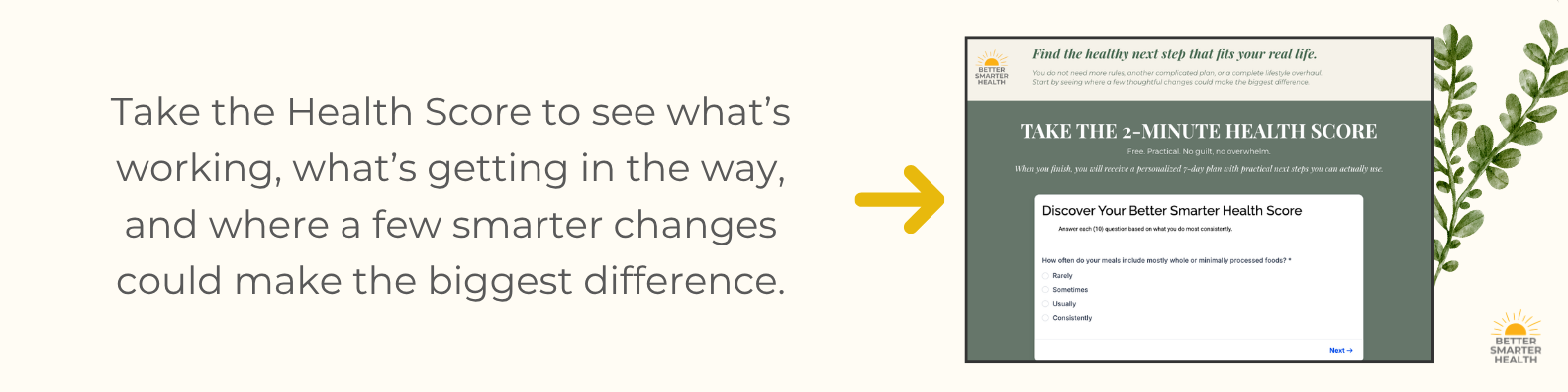
Curious what might be standing in the way of your own healing? Take the Health Score quiz to get a clearer picture of where to start: bettersmarterhealth.com/your-health-score
Personal Concierge Reset
Sometimes the obstacles to healing live in your home, not just your history. A Personal Concierge Reset walks through your space with you and helps you identify what may be quietly working against your body's ability to balance itself. Learn more here.


