
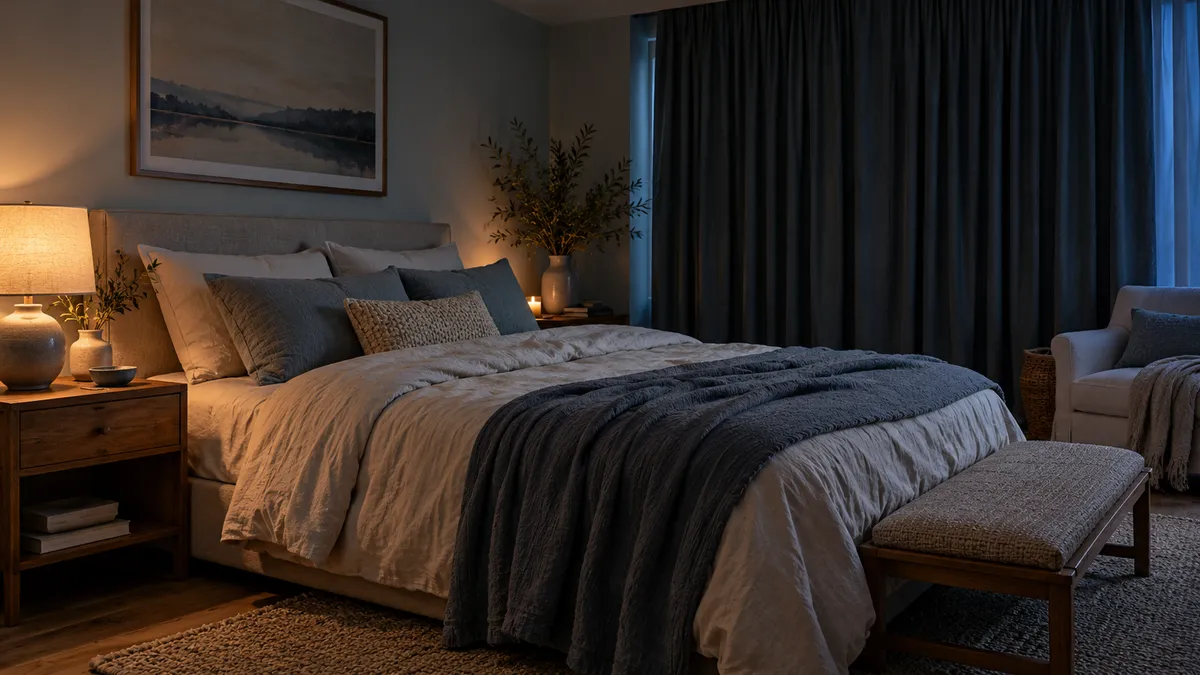
How to Get Your Sleep Schedule Back After Thanksgiving
Thanksgiving week rarely runs on a normal schedule. Late nights with family, early alarms for travel, and a slow Friday morning that turns into a slow Saturday can leave bedtime drifting later and Monday morning feeling harder than usual.
Usually, your daily rhythm just got pulled in a few directions at once. You do not need a dramatic fix. A few steady habits over several days can be a useful place to start.
This guide is education, not medical advice. If sleep trouble lasts or you have a health condition, talk with your doctor.
Why Holiday Weeks Throw Off Your Sleep Timing
Your body runs on roughly 24-hour cycles called circadian rhythms. According to the National Institute of General Medical Sciences (NIH), light and dark have the biggest influence on those rhythms, but food intake, stress, physical activity, social environment, and temperature affect them too.
A holiday week shifts almost all of those at once: more time indoors, later nights around people, a different bed, and morning light at odd times. Together, they can nudge your sleep later than you want.
Start With One Anchor: Your Wake Time
If you only pick one habit to protect this weekend, make it a steady wake-up time.
The American Academy of Sleep Medicine (AASM) suggests getting up at the same time every day, even on weekends or during vacations. The National Institute on Aging gives similar advice, even when traveling.
The National Heart, Lung, and Blood Institute (NHLBI) adds a helpful detail: try to keep weeknight and weekend sleep schedules within about an hour of each other, because staying up late and sleeping in late can disrupt your body clock's sleep-wake rhythm.
Choose the time you plan to get up on Monday and start aiming for it on Friday or Saturday. Getting close, most days, is the goal.
After a Very Late Night, Skip the Noon Lie-In
Thanksgiving night often runs late, and sleeping until lunch is tempting. A very long lie-in can feel good, but it can also push the whole next night later. A gentler approach many people find helpful:
- Get up within about an hour of your usual time, even if you went to bed late.
- If you need rest later, keep a nap short and early. The NHLBI suggests adults nap no more than 20 minutes, and notes that if you have trouble falling asleep at night, naps are best limited or taken earlier in the afternoon.
- Let the next bedtime come a little earlier if you feel sleepy, instead of forcing a long sleep the morning after.
Researchers quoted by NIH News in Health say a nap or a bit of extra sleep after one bad night can help, but a weekend is not enough to make up for a whole week of too little sleep.
Get Daylight Early in the Day
Light has the biggest influence on your body clock, so getting daylight soon after your steady wake time is a natural pairing. NIH News in Health suggests trying to get natural sunlight for at least 30 minutes every day.
Open the blinds as soon as you get up, drink your coffee on the porch, or take a short walk outside. Jen walks every morning with her puppies, Charlie and Bentley, an easy way to pair daylight with movement.
Ease Bedtime Earlier in Small Steps
If bedtime crept from 10 PM to midnight, jumping straight back to 10 PM on Sunday may leave you lying awake. A gradual shift is often easier.
The AASM uses this same principle for jet lag: slowly changing when you go to sleep and wake up makes it easier to adjust to a new schedule. At home, that can look like moving bedtime a little earlier each night, for example 15 to 30 minutes, while your wake time stays steady.
Go Easier on Late Caffeine and Evening Drinks
The NHLBI notes that the effects of caffeine can last up to 8 hours, so a late-afternoon cup can make it harder to fall asleep. The AASM suggests avoiding caffeine in the afternoon or evening and avoiding alcohol before bedtime.
Until your schedule settles, try keeping coffee to the morning and early afternoon.
If You Traveled Across Time Zones
If Thanksgiving meant a flight, you may be dealing with a time zone shift on top of late nights. The AASM notes it can take about one day per time zone for the body clock to fully adjust, and older adults may need longer. Daytime sunlight at home, modest caffeine and alcohol, and a steady wake time can help you settle back in.
A Brief Note on Winding Down
The NHLBI suggests using the hour before bed for quiet time and avoiding bright screen light, which may signal the brain to stay awake. For a closer look at the room itself, see Is Your Bedroom Helping You Sleep or Keeping You Awake?
A Simple Four-Day Plan
- Friday: Get up within about an hour of your usual time. Get daylight soon after waking. Keep any nap short and early.
- Saturday: Same wake time. Morning coffee only. Bedtime a little earlier if you feel sleepy.
- Sunday: Same wake time. A quiet, low-light hour, then another small step earlier.
- Monday: Your usual wake time and some morning daylight.
When to Check In With Your Doctor
A few rough nights after a holiday are common. The CDC encourages people to talk with a healthcare provider if they regularly have problems sleeping or notice signs of common sleep disorders. If sleep trouble continues for weeks, you feel very sleepy during the day, or you have a health condition or take medications that affect sleep, please talk with your doctor. A simple sleep diary of bedtimes, wake times, naps, and caffeine can make that conversation easier.
FAQ
How long does it take to get back on a normal sleep schedule after the holidays?
It varies. Many people find a few days of a steady wake time and morning light helps. If you crossed time zones, it may take longer.
Is it okay to sleep in the day after Thanksgiving?
A little extra sleep after a late night is fine for many people. Try to stay within about an hour of your usual wake time, as the NHLBI suggests.
Should I take melatonin to fix my schedule?
The AASM notes that melatonin taken at the wrong time can make things worse. Ask your doctor before starting any supplement.
A Personal Helper for the Legwork
If the season is full and your routines keep slipping, you do not have to sort it out alone. Better Smarter Health offers a personal concierge, a helper who does the legwork for you. That can include researching options and pointing you toward practical resources in Montgomery County and The Woodlands.
When you are ready, reach out through Better Smarter Health and ask about the personal concierge.
Better Smarter Health is wellness education, not medical advice.
Sources
- National Institute of General Medical Sciences (NIH). Circadian Rhythms.
- American Academy of Sleep Medicine, Sleep Education. Healthy Sleep Habits.
- National Institute on Aging. Sleep and Older Adults.
- National Heart, Lung, and Blood Institute. Sleep Deprivation and Deficiency: Healthy Sleep Habits.
- NIH News in Health. Good Sleep for Good Health.
- American Academy of Sleep Medicine, Sleep Education. Jet Lag.
- Centers for Disease Control and Prevention. About Sleep.


