Ever feel like your brain could use a tune-up?
The good news: hobbies boost brain health in powerful ways backed by science.
Research shows that everyday hobbies – the ones you enjoy for fun – can help your brain stay sharp, resilient, and happy at any age.
Hobbies Boost Brain Health
Dr. Vonetta Dotson, chief of neuropsychology at Brigham & Women’s Hospital and author of Keep Your Wits About You, puts it simply:
“Engaging in hobbies is one of the best ways to keep your brain healthy.”
From improving memory and focus to lowering stress and boosting mood, hobbies that boost brain health truly are a gift.
And the best part? It’s never too late to start.
Here are 10 research-backed hobbies that boost brain health:
1. Aerobic Exercise
Whether it’s brisk walking, hiking, or pickleball, movement fuels your brain. Studies show exercise improves cognitive function — even in people over 50. The best exercise? The one you’ll actually do consistently.
2. Dancing
Dancing blends cardio, coordination, and connection. It requires both body and mind to work together, strengthening neuroplasticity and protecting brain health.
3. Music
Listening, singing, or learning an instrument engages multiple brain systems at once. Bonus: trying something new (like guitar or piano) gives your brain the novelty it craves to build fresh pathways.
4. Gardening
More than just a way to grow veggies, gardening boosts nerve growth factors linked to memory. Plus, harvesting something you nurtured provides a sense of accomplishment — a major brain booster.
5. Arts & Crafts
From doodling to painting, making art lights up the brain’s prefrontal cortex, improving creativity and problem-solving. It’s also deeply relaxing, lowering stress hormones that can impair memory.
6. Volunteering
Helping others is just as good for you. Volunteering fosters connection, purpose, and mental agility — with research linking it to stronger memory and processing speed.
7. Needlecraft
Knitting, quilting, crocheting, embroidery… these “grandma hobbies” are anything but outdated. They support mental health, encourage social bonding, and create a calming sense of achievement.
8. Reading
Curling up with a good book isn’t just entertaining — it protects against long-term cognitive decline. Reading keeps your language centers active and your imagination alive.
9. Puzzles & Games
Wordle, Scrabble, crosswords, Sudoku — these aren’t “just games.” They sharpen flexible thinking, strategy, and language skills. Your daily puzzle habit is basically a workout for your brain.
10. Birdwatching
Spending time with birds in your backyard or local park has been linked to better mental wellbeing, even for those with depression. It’s nature, mindfulness, and curiosity rolled into one.
The Bigger Picture
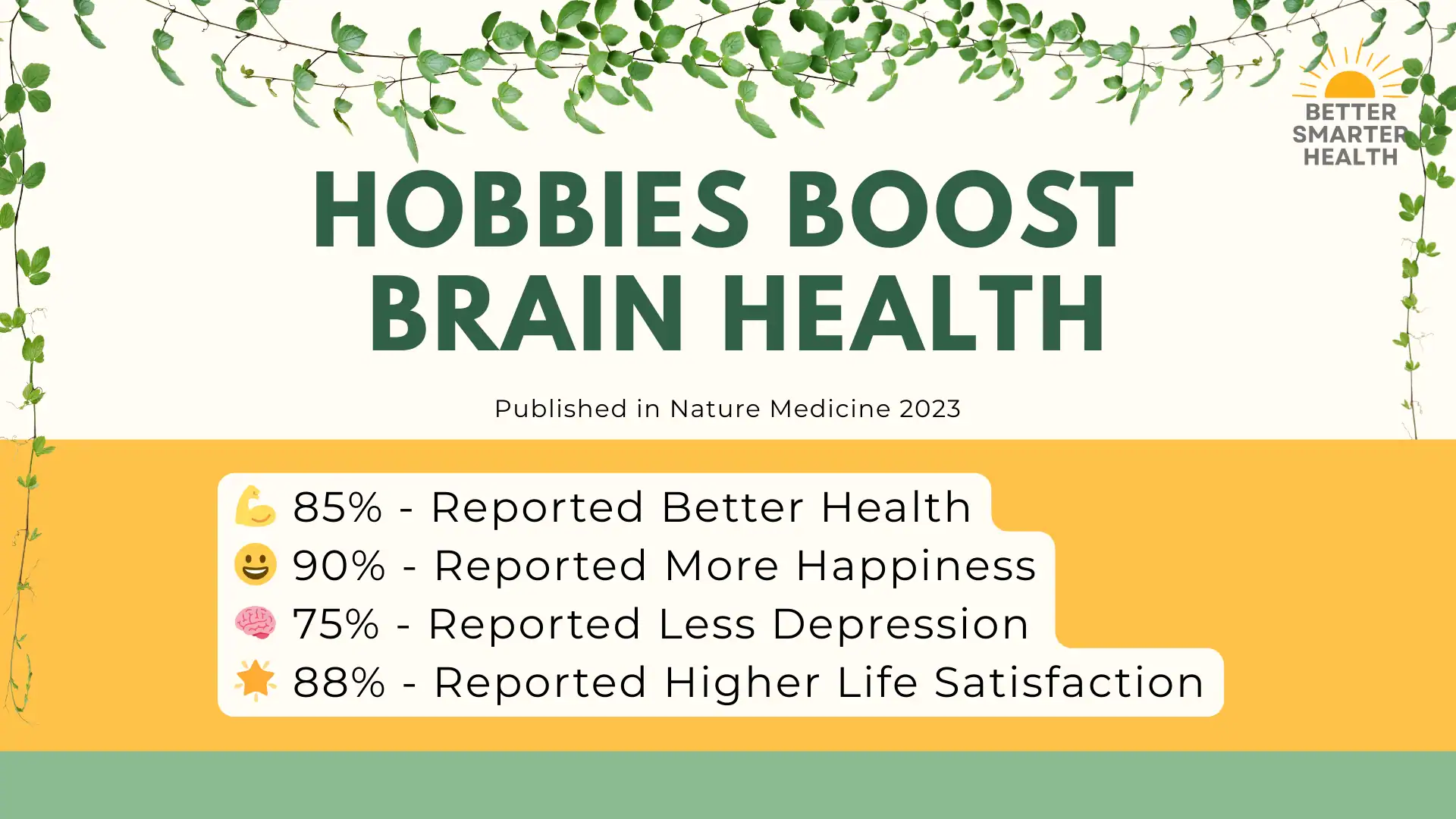
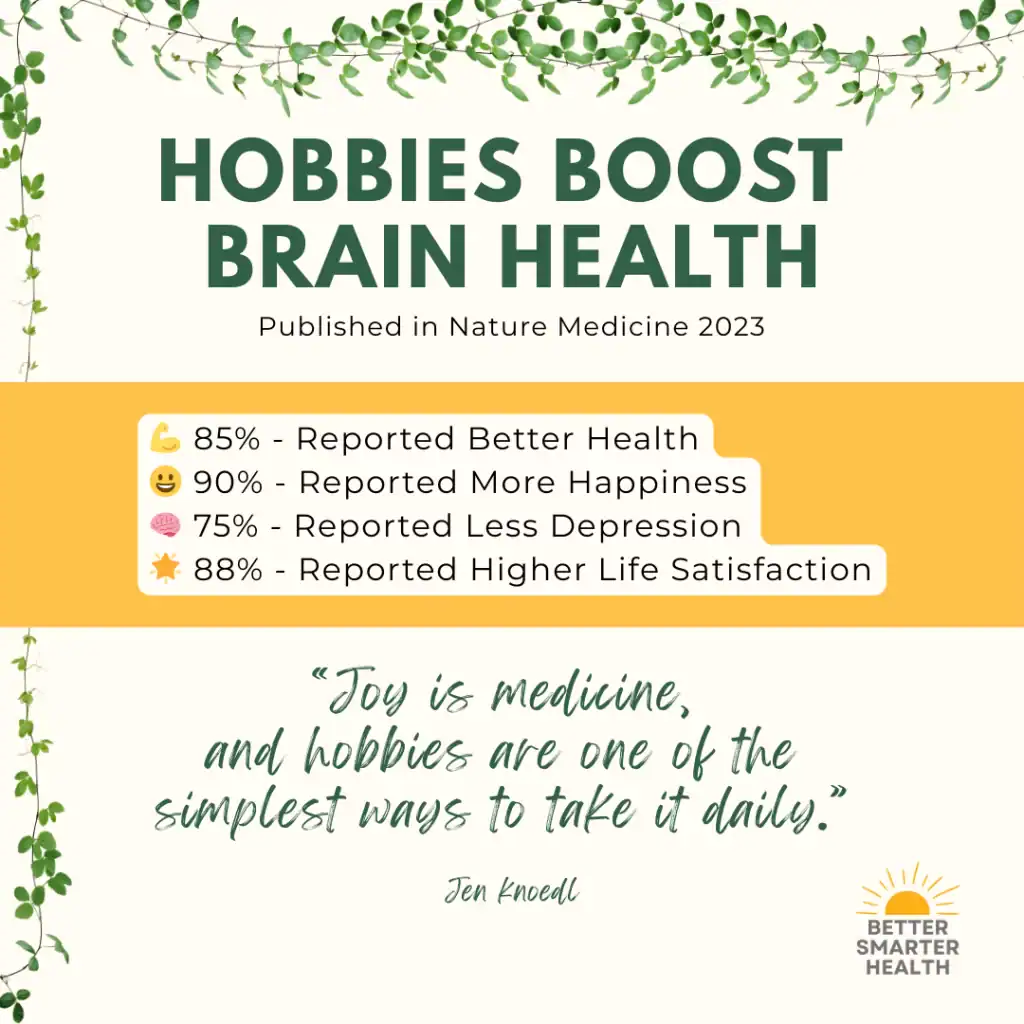
A massive 2023 study of over 93,000 older adults found that people with hobbies reported:
- Better overall health
- More happiness
- Fewer symptoms of depression
- Higher life satisfaction
That’s powerful evidence that hobbies don’t just pass the time — they transform the way our brains and bodies age.
“The brain maintains neuroplasticity — its ability to adapt and form new connections — throughout the lifespan,” says Dr. Dotson. “It’s never too late to learn.”
So whether you’re picking up an old passion or trying something new, your brain will thank you for it.
✅ Takeaway: Start small. Pick one hobby that excites you and carve out time for it this week. Think of it as joy with benefits — fun now, and better brain health for years to come.
Browse Collections
Find the best resources for your wellness journey.